
Where Does the Vein Lead? Unpacking the Soul of Natural Stone Slab Design
- creton
- June 24, 2026
- 0 Comments
There is a moment that every designer knows — standing in a stone yard, morning light slanting across a wall of raw slabs, when a single vein catches your eye and does not let go. It curves, branches, fades, and resurfaces like a river seen from altitude. You follow it. And in that quiet act of following, something shifts: you are no longer choosing a material. You are entering into a conversation with the earth itself.
Natural stone slabs occupy a singular position in luxury interior design. They are simultaneously ancient and utterly contemporary, geological and deeply personal. No two are alike. No factory can replicate what millennia of heat, pressure, and mineral movement have produced. And it is precisely that irreplicability — that beautiful stubbornness of nature — that makes them the defining element of the world’s most extraordinary interiors.
What the Stone Is Actually Telling You
A vein in marble is not a flaw. It is a record. When magma cooled against sedimentary rock millions of years ago, mineral-rich fluids forced their way through fractures, crystallising into the dramatic sweeps of colour we now prize above all else. The dark diagonal slash across a field of white Calacatta is calcite under pressure. The gold threading through Breccia Capraia is iron oxide finding the path of least resistance. To understand this is to look at a slab and see not just a surface, but a timeline.
In bespoke stone design, reading a vein means asking the right questions. Where does it originate — at a corner, across a centre, or cascading from top to bottom? How does its weight and direction affect the visual balance of the space? Does it echo the linear geometry of the architecture, or does it introduce a necessary counter-rhythm? These are not aesthetic indulgences. They are structural decisions that determine whether a slab merely fills a space or genuinely animates it.
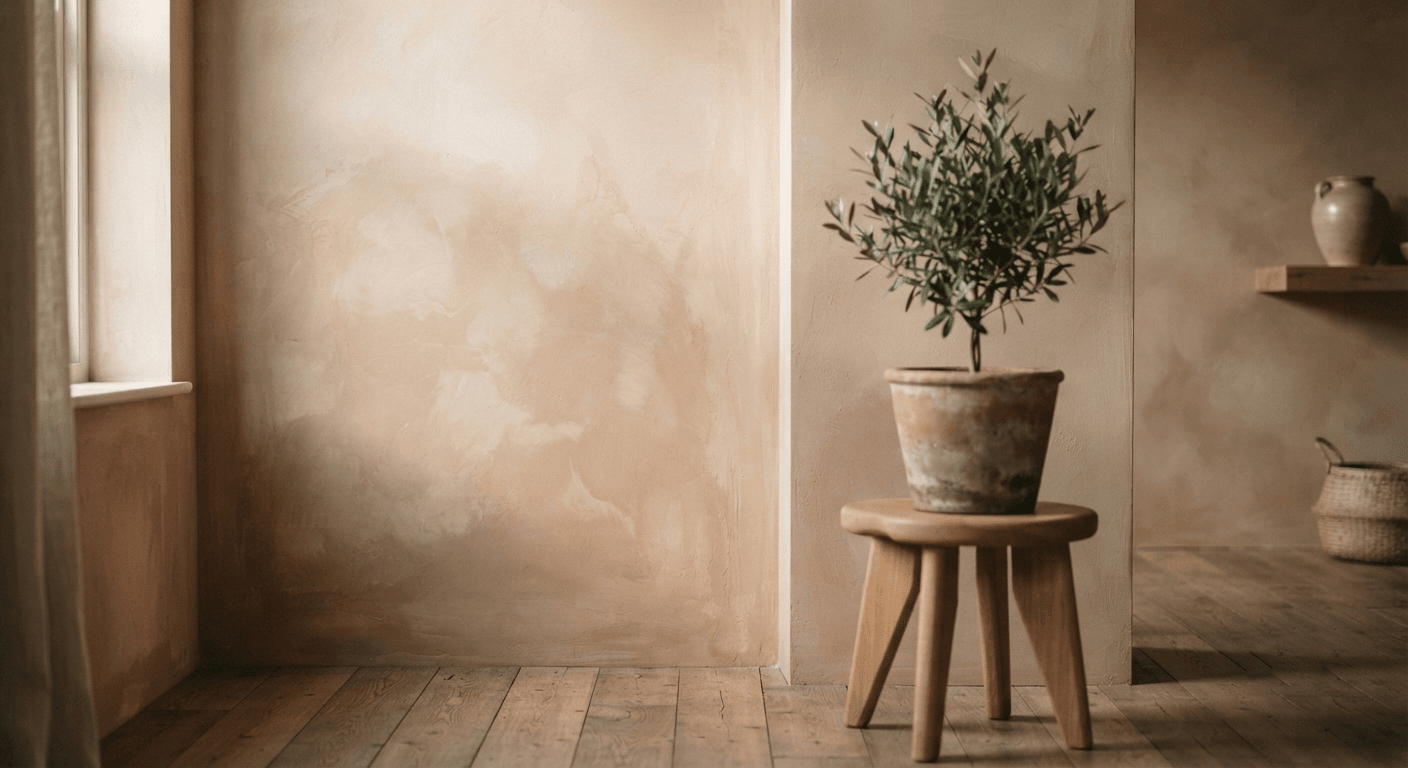
The difference between a beautiful kitchen and an unforgettable one is almost always a decision made standing in a stone yard, before a single tile is cut. The same principle holds true for every surface in the room — including the walls and floors that surround it. At Creton, our Limewash and LimeSilk wall finishes are designed with exactly this sensitivity in mind: surfaces that respond to light, age with character, and frame natural stone without competing with it.
Why Bespoke Stone Demands an Intimate Dialogue
Material selection in the context of natural stone slabs is not an exercise in cataloguing options. It is an intimate dialogue — between designer and client, between slab and space, between the particular and the universal. A Calacatta Oro that glows in the showroom may read as restless and overwrought in a contemplative bathroom. A quiet Grigio Versilia that appears understated in isolation may become the most arresting surface in the room when the evening light arrives.
This is why the most accomplished designers insist on seeing full slabs, not samples. A four-inch tile tells you nothing about how a vein moves across six linear feet of kitchen island. The slab must be experienced at scale, ideally in natural light, ideally more than once. The stone that seemed right on Tuesday often looks different on Thursday — and that difference, seen and felt before commitment, is priceless. This is precisely why Creton’s process begins with a consultation and sampling stage — so every surface decision, from stone to finish, is made with full confidence.
The decision to embrace natural stone’s inherent character — the occasional dramatic fissure, the depth of colour that shifts from grey to lavender depending on the hour, the mineral inclusions that catch light unexpectedly — is ultimately an expression of confidence. Confidence in the material. Confidence in the design. Confidence in the client’s willingness to live with something genuinely alive.
From Countertop to Sculptural Centrepiece
There is a particular alchemy that happens when a natural stone slab is placed correctly in a room. A kitchen island ceases to be a functional surface and becomes a sculptural statement. A bathroom wall stops being a backdrop and starts being a landscape. A fireplace surround, veined in exactly the right direction, can anchor an entire living room’s sense of gravity and permanence.
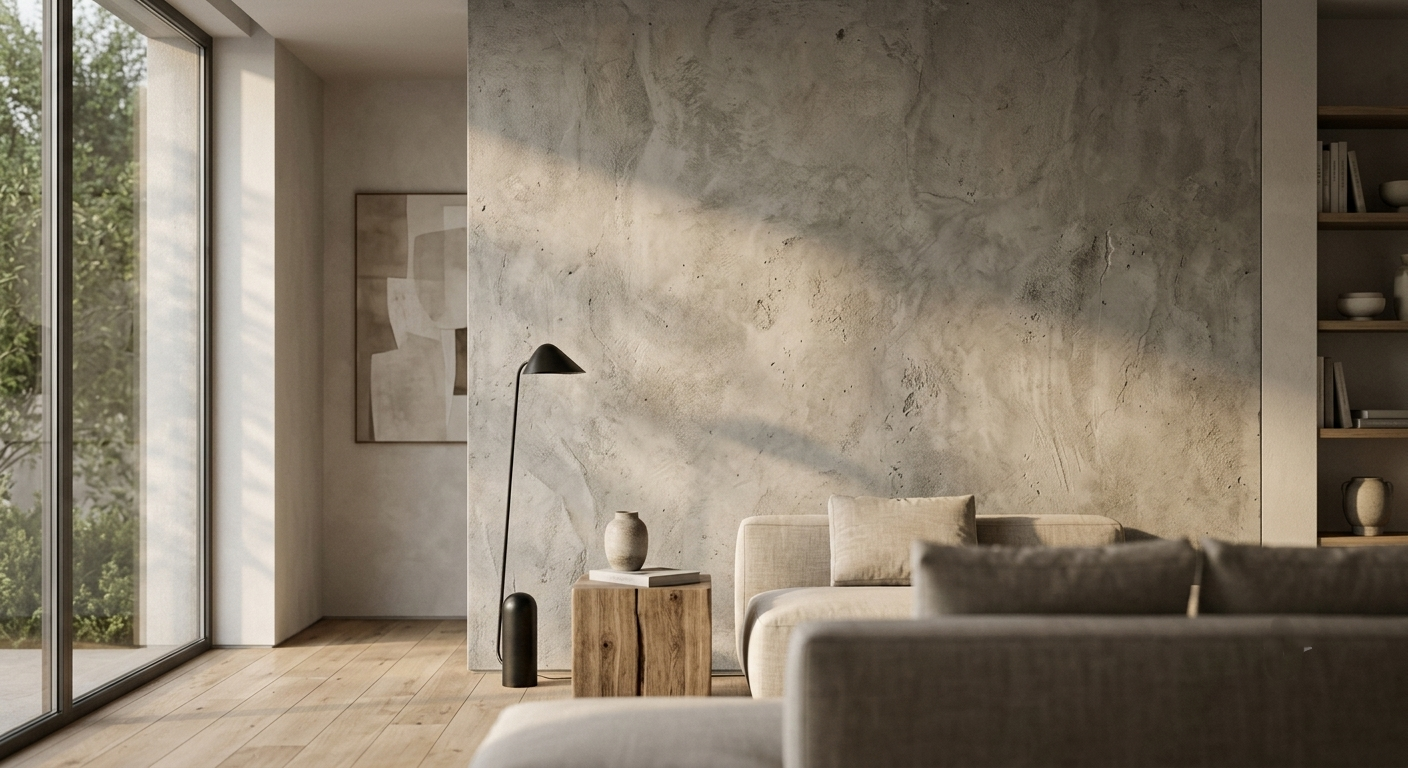
Achieving this requires thinking beyond the slab in isolation. It means considering how the stone’s dominant tones interact with the cabinetry, the metalwork, the flooring, and the quality of light at different times of day. It means understanding that book-matching — mirroring consecutive slabs to create a symmetrical, almost butterfly-wing pattern — can turn a simple wall into a meditative focal point. It means knowing when to let a single dramatic slab speak on its own, and when to use restraint in the surrounding palette so as not to compete with nature’s own complexity. A micro concrete floor in a complementary neutral tone, seamless and grout-free, is often the most intelligent choice beneath a statement stone wall — it extends the visual calm without introducing a rival texture.
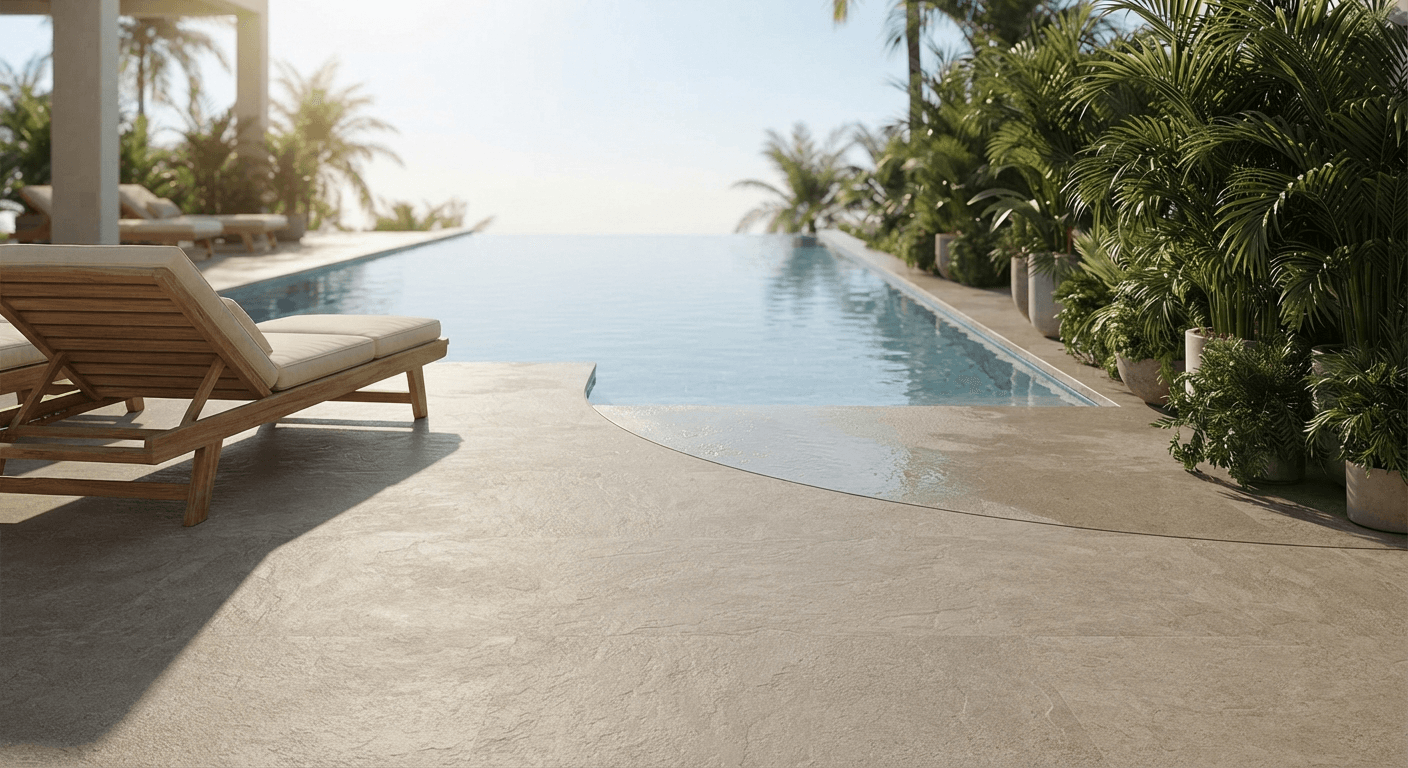
The finest bespoke stone projects share a common thread: every decision, from slab orientation to edge profile to finish, has been made in service of the stone’s own narrative. The designer’s role is not to impose a vision upon the material, but to find the vision already present within it — and then give it the space to be seen. Creton’s Stone Wash Flooring offers another elegant bridge between natural stone and the surrounding space — delivering the warmth and tactility of stone in a seamless, low-maintenance format that unifies rather than fragments.
Why Natural Stone Slabs Are Not a Trend — They Are a Legacy
Design trends come and go with remarkable speed. The stone chosen for a Roman villa two thousand years ago is still being quarried and admired today. There is a lesson in that continuity: natural stone does not participate in fashion. It transcends it.
In luxury interior design, where longevity of taste is as important as immediate impact, this is not a minor consideration. An engineered surface may simulate marble convincingly enough to pass a casual glance, but it cannot replicate the depth that occurs when light enters a natural crystal structure and refracts from within. It cannot replicate the slight variation in temperature that real stone holds against your hand. It cannot replicate the knowledge, however abstract, that what you are touching was formed before the first human being ever existed. The same philosophy runs through Creton’s approach to Concrete Texture finishes — surfaces designed not to imitate nature, but to honour it.
These qualities accumulate over time into something that the design industry often struggles to name: presence. The presence of genuine material in a space communicates something about the people who chose it and the values they hold. It says: we were not interested in approximation. We wanted the real thing.
And the real thing, properly chosen and impeccably placed, does not date. It deepens.
The Vein Leads Here
Ultimately, the vein leads us not just to a visual destination, but to a deeper understanding of how nature’s raw beauty can shape our most cherished environments. It is an invitation to pause, to admire the intricate lacework of quartz and feldspar, and to recognise that in the careful selection and placement of natural stone slabs, we are curating not just interiors — but legacies.
The indelible mark of these geological wonders offers a timeless foundation for any luxury interior design, promising enduring appeal and an unparalleled connection to the earth’s own artistry.
So the next time you stand before a slab — whether it is a sweeping expanse of Calacatta in a sunlit showroom or a quiet piece of honed basalt at the back of a yard — take a moment before you decide. Follow the vein. Notice where it begins, where it travels, and where it quietly disappears. In that journey, you will find not just a material, but a story worth telling for generations to come.
At Creton, we believe that every great interior begins with that moment of recognition — when stone and space find each other. Our surfaces — from Limewash and LimeSilk walls to Micro Concrete and Stone Wash floors — are crafted to live alongside natural stone, not beneath it. If you are ready to begin that conversation, we are ready to listen.